Pipeline
Services
Complete pipeline lifecycle support from commissioning pigging through integrity management, product characterization, and decommissioning.
1000+ km
Pipeline Serviced
100+
Pig Runs Completed
99.9%
Integrity Verification
Complete Pipeline Lifecycle Support
Pipeline services span the full asset lifecycle — from pre-commissioning cleaning and testing through operational maintenance, product transitions, and end-of-life decommissioning.
Phase 01
Commissioning & Integrity
Initial pipeline cleaning, gauging, hydrostatic testing, and drying to achieve regulatory acceptance and operational readiness.
Progressive pigging and gauging runs.
Hydrostatic testing to design pressure.
Dew point drying to pipeline specifications.
Phase 02
Operations & Decommissioning
Ongoing maintenance pigging, product displacement, inhibitor application, and safe pipeline abandonment procedures.
Maintenance pigging and wax/scale removal.
Product characterization and batch separation.
Pipeline purging, cleaning, and abandonment.
Pipeline Capabilities
Specialized tools and techniques for every pipeline diameter, product type, and operational requirement.
Pigging & Gauging
Utility, cleaning, and intelligent pig runs for all pipeline sizes and product types.
Hydrostatic Testing
High-pressure water testing to verify pipeline integrity before commissioning or re-certification.
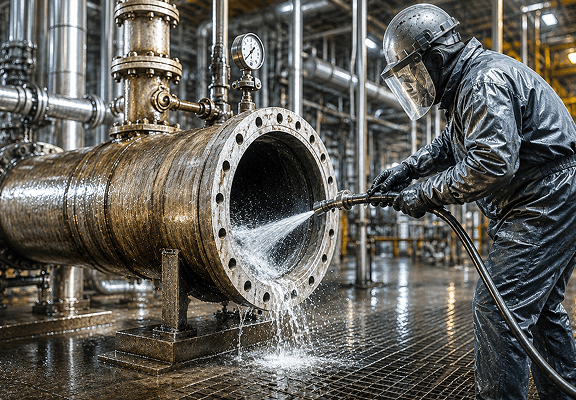
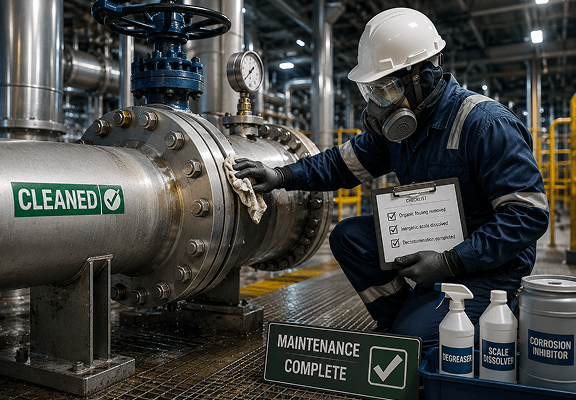
Inline Cleaning
Mechanical and chemical cleaning pigs to remove deposits, scale, and corrosion products.
Dew Point Drying
Nitrogen and vacuum-assisted drying to achieve pipeline moisture specifications.
Product Characterization
Batch pigging for product transitions and quality assurance between incompatible fluids.
Decommissioning
Safe pipeline abandonment including purging, cleaning, inhibitor application, and cap welding.
Sectors We Empower
Industries We Serve
Custom-engineered solutions built specifically to handle the critical demands and stringent standards of heavy industry sectors.
Oil & Gas
Upstream extraction, midstream transmission pipelines, and downstream processing.
Explore Industry →
Petrochemical
Complex chemical processing refining plants with extreme heat and cleaning parameters.
Explore Industry →
Energy
Turbine, nuclear, hydro, and next-gen steam generator setups requiring high-cleanliness tolerances.
Explore Industry →
Utilities
Water, steam, and distribution infrastructure supporting regional grids and public safety.
Explore Industry →
Industrial Facilities
Large scale plants, pulp & paper mills, smelting factories, and dry-bulk terminals.
Explore Industry →
Manufacturing
Precision fabrication and manufacturing operations requiring specialized utility piping lines.
Explore Industry →
Answers to Critical Concerns
Frequently Asked Questions
Common questions about our pipeline services standards and deployment approach.